


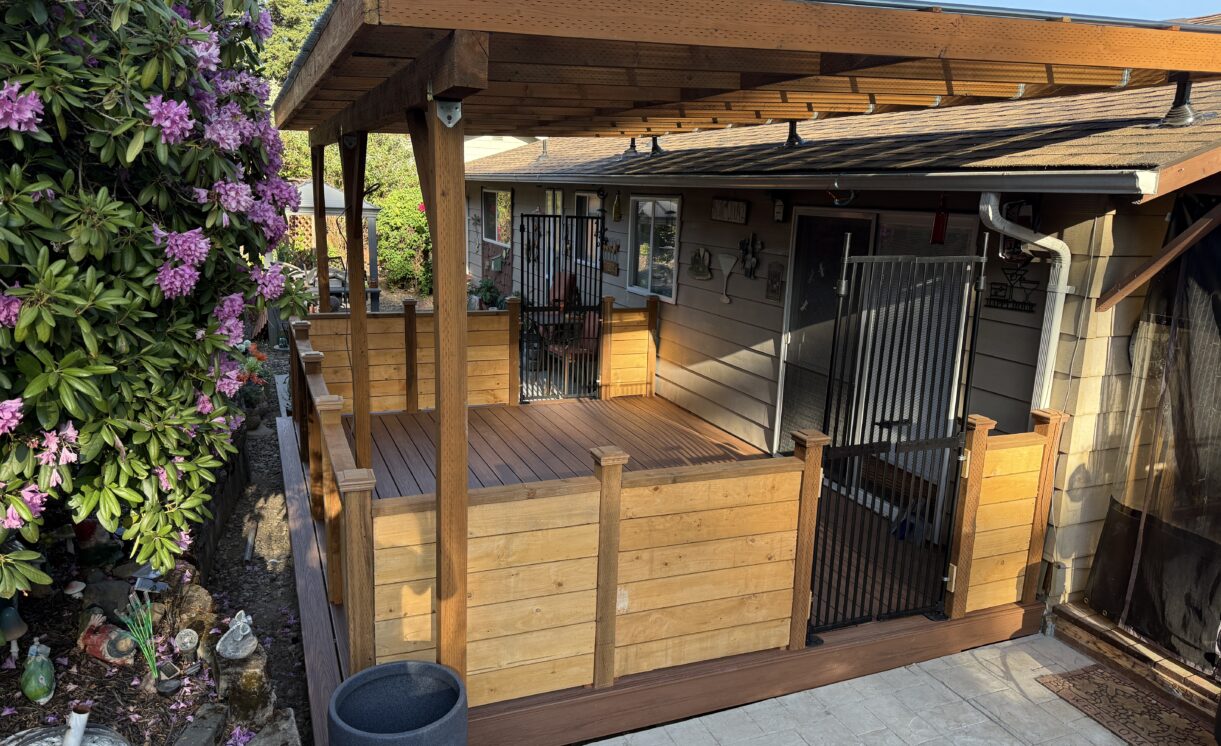
Yes, both wood and modern composite decks are designed to withstand the elements. But their lifespan and appearance directly depend on regular cleaning, proper chemical treatments, and careful winter maintenance. In the US, manufacturers’ recommendations are consistent: dirt and organic matter are the main enemies; harsh cleaning products and excessive water pressure are a common cause of hidden defects. Therefore, below is a practical, no-brainer guide on what, how, and what to do to make your deck last longer and look better.
Wood vs. Composite: What to Consider When Caring for
Wood decking is porous. It absorbs moisture, staining liquids, and grease. To delay graying and cracking, homeowners in the US typically wash it with mild cleaners and periodically reapply a protective coating, such as oil or a translucent or clear sealer. A good guideline is every 1–3 years, depending on climate and traffic. A simple drip test can help determine if it’s time to refinish the deck: if water soaks in rather than runs off, it’s time.
Composite decking varies. Early “uncapped” boards required gentle cleaning, while modern “capped” composites and PVC are more resistant to stains and moisture but still require regular cleaning. A key point: recommendations for water pressure and suitable cleaning products vary by brand—it’s important to follow them closely.
Cleaning methods and equipment: hose, brush, pressure washer
Basic cleaning is the same for both decking types: sweep away debris, rinse with water, brush with a soft brush and soapy water, then rinse thoroughly. If using a pressure washer, follow your specific manufacturer’s instructions. For Trex composite decking, use a pressure washer with a fan nozzle and a minimum distance of 20 cm; pressure up to 3100 PSI. TimberTech, on the other hand, limits pressure and recommends using a pressure washer only for rinsing—no more than 1500 PSI and with a fan nozzle. These differences are critical: excessive pressure leaves streaks and removes the protective layer. For wood, use low settings and a wide stream, working along the grain.
Oxygen-based cleaning solutions (oxygen bleach) work well on wood. They lift organic matter from the pores without harsh chlorine or alkali; afterward, an oxalic acid-based “Breitner” is often used to restore the wood’s fresh color and remove tannin and rust stains. Chlorine-containing bleaches are not recommended for pressure-treated wood: they weaken lignin and accelerate fastener corrosion.
Where the water goes is also important. When washing outdoors in the US, it is recommended not to discharge dirty water and chemicals into storm drains, but to direct the runoff to the ground/lawn or collect it—this is part of standard BMPs for protecting against runoff pollution.

Stains, grime, and mold: localized solutions
A fresh greasy grill stain is easiest to remove with warm water, a surfactant, and a soft brush. There’s an important caveat for Trex composite: to maintain the stain resistance guarantee, it’s best to remove the stain within a week. For tannin and rust stains, use a brightener with oxalic acid; on wood, it restores the natural tone, and on composite, it helps remove organic stains. Biodegradation (moss, mold, and algae) is often caused by dirt and shade rather than the material itself; in the US, specialized decking compounds and a gentle brush are used in such cases.
American Winter: Snow, Ice, and Chemicals
The golden rule is to use only a plastic shovel without a metal edge. Most major brands allow calcium chloride-based products for composite decking, while some also allow regular rock salt. However, their stances differ: TimberTech specifically recommends calcium and avoids table salt; Trex sometimes allows both. In any case, it’s best to sweep up the granules and rinse off any residue as soon as possible. Salt is not recommended for wood decking at all due to the high risk of staining and damage to the finish.
Seasonal Maintenance Calendar
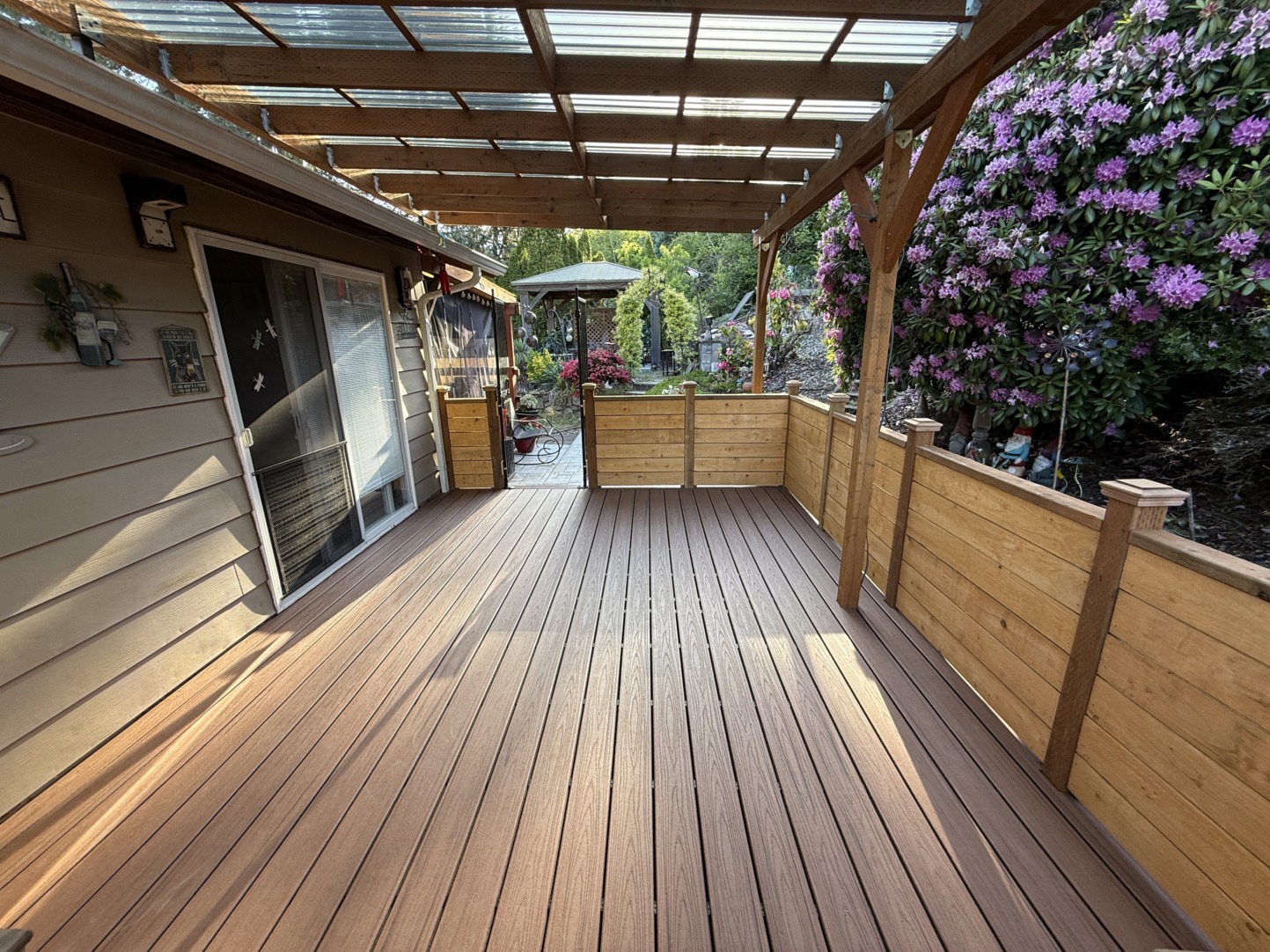
- Monthly (seasonally): dry cleaning, hosing down, inspection of seams and drainage.
- Spring: deep cleaning, for wood – oxygen cleaner and, if necessary, “Breitner”; inspection of fasteners and railings.
- Summer: quick wash after pollen/barbecue, stain removal within 24-72 hours.
- Fall: leaf raking, seam washing, inspection of the junction with the house.
- Winter: periodic clearing with a plastic shovel; on composite – use approved chemicals, then rinse.
- Every 1-3 years (wood): refresh the oil/stain/selector; use a drop test.
Common mistakes to avoid in the US
- Excessive pressure washing. This leaves grooves in the wood and “streaks” the composite.
- Chlorine bleach on treated wood. Accelerates the deterioration of fibers and fasteners.
- Metal shovels and colored cleaning agents in winter. They scratch and can stain the deck.
- Discharging chemicals into storm drains. This is a violation of local regulations and damages landscaping.
- Rubber mats and heavy pots without heel pads on composite decking. This can cause stains and trap moisture.
Tools and chemicals: a minimum set
For daily maintenance, you’ll need a spray hose, a soft brush with a telescopic handle, and a neutral cleaning solution. For wood, add an oxygen cleaner based on sodium percarbonate and Breitner (oxalate). For composite decking, keep your decking brand’s proprietary cleaner and a mild degreaser on hand. If using a pressure washer, use a fan attachment, test on an inconspicuous area, and adhere to the manufacturer’s PSI limits—they do vary.
Regional nuances for the US
- West Coast (Mediterranean, salt/fog): Frequently rinse off salt with fresh water. For wood, use UV-resistant oil. Fasteners: 316 stainless steel.
- Pacific Northwest (rain, shade): Moss and algae control. Regular cleaning of grout and good drainage.
- Southwest and high altitudes (dry, strong UV, fluctuating temperatures): Maintain expansion joints. Light-colored finishes and gentle washing. In winter, use a plastic shovel.
- Northeast and Midwest (hot summers, cold winters): In spring, deep clean and check fasteners. Avoid salt on wood; on WPC, apply calcium chloride, then rinse.
- Southeast and Gulf Coast (hot, humid, storms, salt): Mold prevention and frequent freshwater flushes. Connectors — 316 stainless steel or high-grade galvanized.
- Alaska and Hawaii (extreme conditions: freezing temperatures/tropical temperatures). Alaska: no chemicals or metal parts; plastic and ventilation only. Hawaii: regular salt flush, non-rubber mats, enhanced UV protection.
Where’s the line between “just a wash” and “time for a refresh?”
The line is simple: if after a regular hose wash and a mild cleaner, the deck looks clean, water beads up, and the surface feels smooth to the touch, regular cleaning is sufficient. However, when the boards gray unevenly, water is instantly absorbed, leaving stain “shadows,” lint, splinters, or greasy marks that don’t disappear in a single cycle—this is a signal for a deep cleaning and renewed protection. Composite decking is different: it almost always requires just a wash, but persistent oil stains, green deposits in the seams, and “streaks” from previous high-pressure cleaning mistakes mean delicate chemicals and restorative cleaning are needed, not just a simple watering.
Another criterion is the behavior of the structure. If the boards creak, the fasteners are protruding, or the railings are yielding to pressure, a cosmetic cleaning won’t solve the problem: you’ll have to dismantle the area, eliminate the source of the dampness, replace the worn-out elements, and only then return to finishing. Conversely, when the geometry is stable and the only visual nuisances are traces of pollen, barbecue, or leaves, don’t rush to oils and sealants—give the deck a chance to “come back to life” with a proper cleaning and drying: this is often enough to restore a neat appearance without unnecessary layers and expense.
Wood Treatment Before Renovation
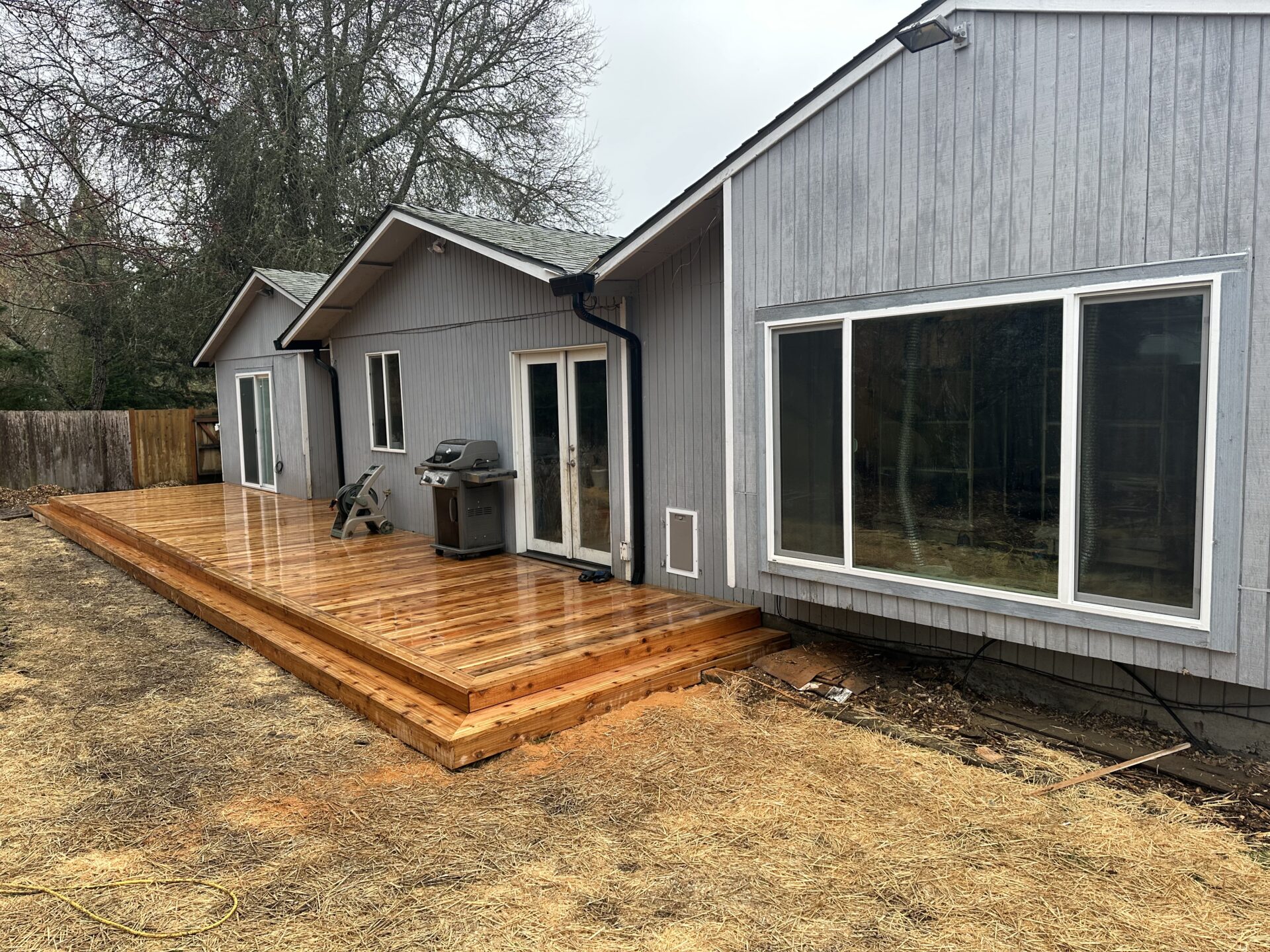
- Cleaning: Sweep up debris, hose down, and protect plants and siding with plastic sheeting.
- Test: Test the cleaner and future stain on a small area.
- Deep cleaning: Use an oxygen cleaner (percarbonate), using a brush along the grain.
- Brightening: For dark spots, apply a “Breitner” oxalate-based stain remover, let it sit, and rinse thoroughly.
- Drying: Allow 24-48 hours without rain; aim for a wood moisture content of ≤ 15%.
- Repair: Tighten fasteners, replace rusted parts, trim splinters and chips.
- Sanding: Remove raised nap and burrs, using 80-120 grit, without excessive sanding.
- Preparing the mixture: Gently mix the oil/translucent stain; do not shake.
- Conditions: Work in the shade at 10–27°C and without strong wind.
- Application: Apply thinly and evenly along the grain; immediately rub off any excess.
- Second coat: If necessary, apply wet-on-wet at the recommended window.
- Duration: Walk-on after 24–48 hours; furniture after 72 hours or more.
- Inspection: Drop test – water should form beads and not be absorbed.
- Plan: Mark the date of work and schedule a renewal in 1–3 years.
Conclusion
A good deck doesn’t require heroics—it requires a smart routine. For wood, this means mild chemicals, gentle cleaning, and regular reapplication of protection. For composite decking, it means cleanliness, careful winter care, and following the brand’s instructions for pressure and chemicals. This approach saves money, time, and stress, and most importantly, it extends the life of the decking and preserves its appearance for years to come. If you’d like, in our next article, we’ll discuss the precise compositions of oxygen-based chemicals, gentle cleaning attachments, and the nuances of caring for PVC and glass railings.
If your deck has moved beyond maintenance and needs professional attention, see our deck repair services or deck resurfacing options available throughout Vancouver WA and Portland OR.


