


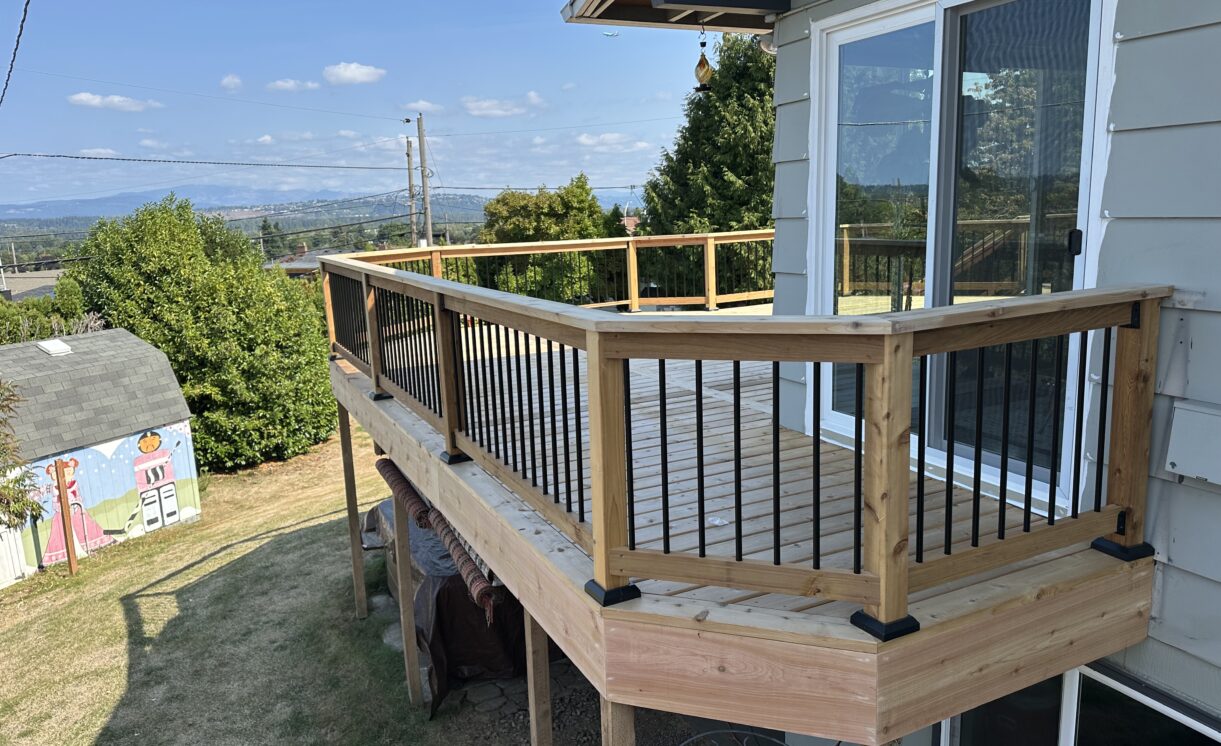
A terrace isn’t just for relaxation. It’s a space subject to loads, wind, moisture, and cyclical heating. Errors in joints accumulate and then suddenly erupt: a wobbly fence, a sagging span, a damp “house joint.” Therefore, the reaction “we’ll figure it out some other time” is inappropriate. Our blog covers many topics related to home and land—from material selection to engineering details—and this article is designed as a calm but thorough checkup: no panic, but to the point.

Three warning signs you shouldn’t ignore
- The fencing is “moving” under your hand. The railings and posts should be able to withstand concentrated force and not become a spring. If the top of the railing shifts and the posts sway at the base, the joint is weak and requires immediate attention. Often, the cause is a poorly positioned fastener or a post placed on the edge of a joist without reinforcement.
- Problems at the junction with the house. Wet spots, blackened wood, gaps, and moisture “sucking” under the decking are signs of improperly fastened ledger and inadequate flashing. Such a joint first gets wet, then rots, and eventually stops supporting the deck.
- Waves, sagging, and “soft” areas. An uneven surface, springy decking, and springy steps indicate long spans, loose joist spacing, subsiding supports, or wood damage. Cosmetic repairs won’t help here: a foundation diagnosis and a reinforcement plan are needed.
Why do these symptoms occur?
Most problems stem from a combination of three factors: poor geometry, inadequate water protection, and inadequate fasteners. A deck is an open structure: rain falls at various angles, and capillary moisture is trapped in cracks. Without proper drainage, water finds its way into the wood and fasteners. This leads to corrosion, loosening of joints, and loss of rigidity.
There’s also the human factor. In private construction, people often skimp on fasteners: instead of certified corners, beam hangers, and anchors, they use “whatever was available.” Initially, the defect isn’t noticeable, but after a season or two, the railing begins to “float,” and the stairs creak. Visually, this looks like fatigue, but technically, it’s a sign of degradation of the supporting structure.
Ledger: A Small Element with a Huge Responsibility
The supporting beam against a wall is the Achilles’ heel of many decks. A proper assembly involves load-bearing fasteners at a specified spacing, moisture separation using flashing, and careful integration with the decking. A faulty assembly at any point in the chain leads to the same thing: water seeps into the deck, the wood darkens, the fasteners rust, and the connection between the house and deck weakens.
The signs are simple: rust tears, dark streaks, bulging siding, soft wood under your fingernail. If even one sign is present, the assembly must be opened and reassembled. Otherwise, the risk of the deck separating from the wall remains, even with a seemingly decent decking.
Railings and Stairs: Rigidity and Repeatability
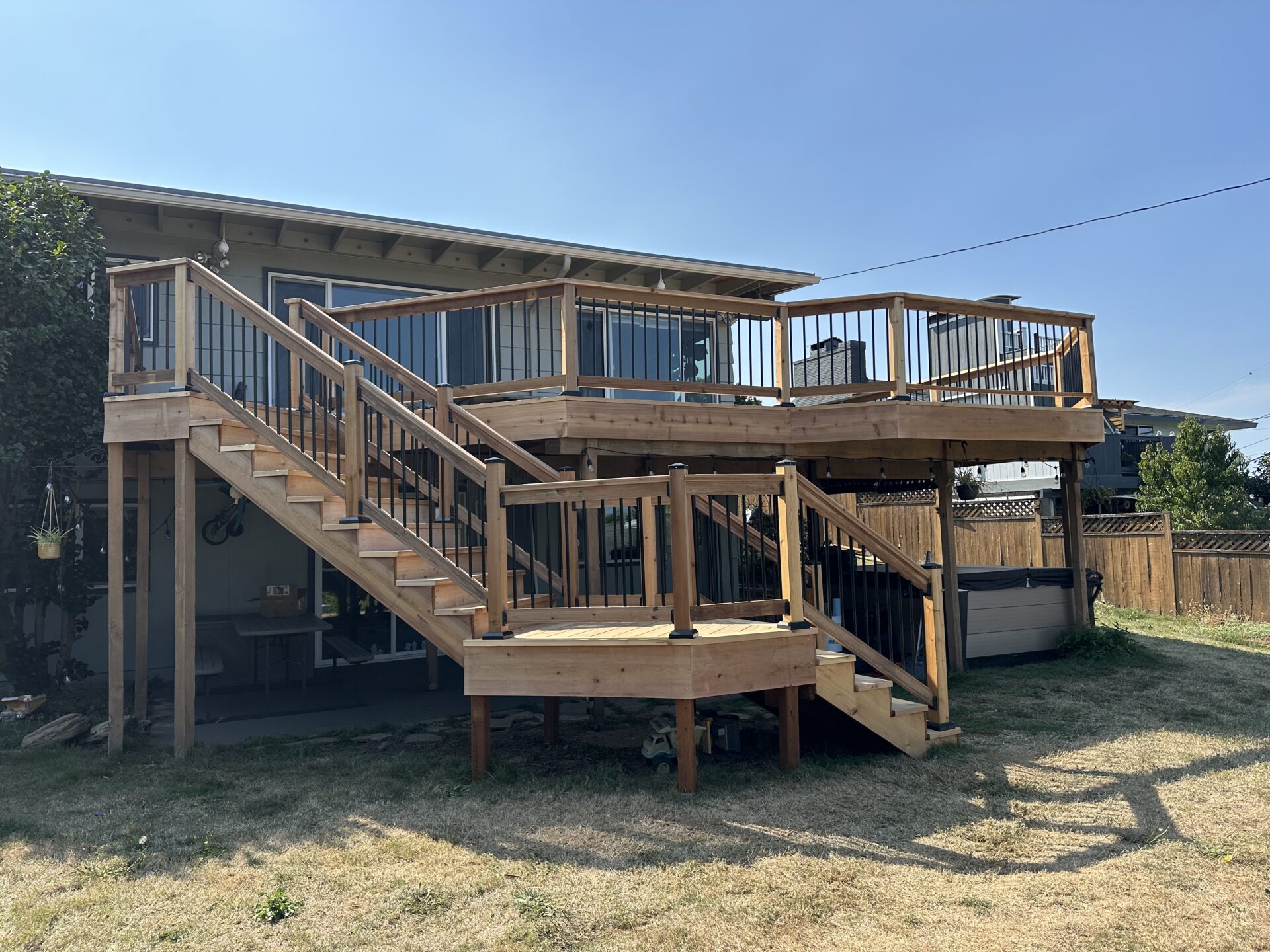
Drainage and ventilation prolong the life of the deck better than any “magic” composition. Slope the deck away from the house by 1-2%, leave 3-6 mm gaps between boards, and don’t completely overlap the perimeter. An air gap is needed under the deck to allow convection, and water should drain away via the shortest possible route. After heavy rains, check for accumulations near the “ledger” and in the recesses under planters. Also, choose breathable textiles and rugs to avoid trapping moisture. This allows the structure to dry faster, and prevents fasteners and wood from deteriorating in constant dampness.
Maintenance is a short but regular ritual. In spring and fall, wash the deck with mild detergents and low-pressure water, clean the seams and drainage system. Inspect the railings, posts, connectors, and fasteners annually; replace any rusty parts promptly. For wood, renew the oil or glaze every 1–3 years, paying attention to the ends and fasteners. For composite and PVC, follow the manufacturer’s guidelines: approved cleaning agents, expansion joints, and fastener types. This regimen reduces the rate of aging of the components and keeps costs under control for the entire life of the deck.
When it’s time to rebuild, not repair
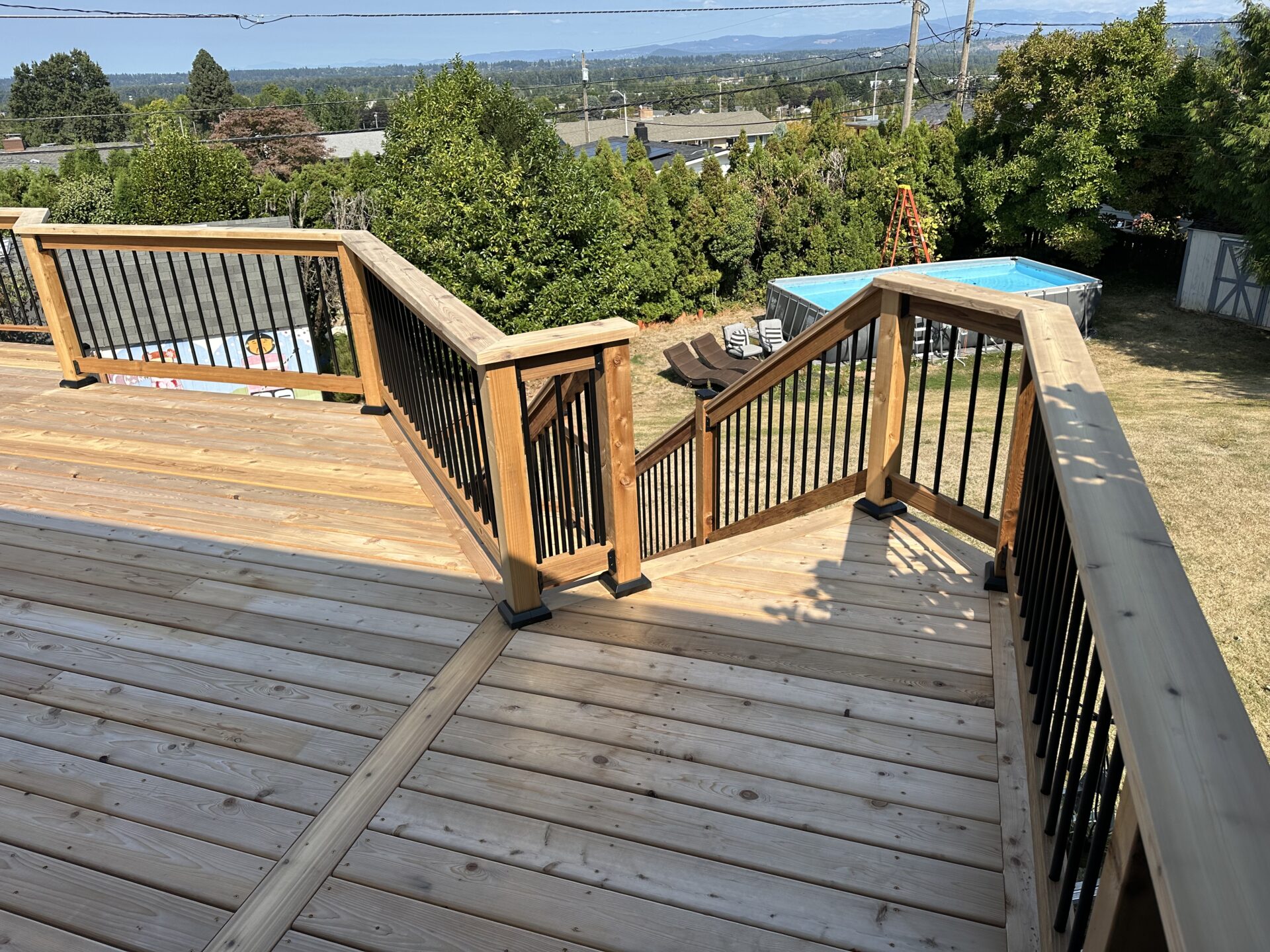
When is it time to rebuild rather than patch? Primarily, when there are systemic foundation defects: a damaged junction with the house, subsiding or improperly installed supports, widespread corrosion of fasteners, and rot in beams and joists that is spread across a wide area rather than in patches. Also, when the design is flawed from the start: spans that are too long, joist spacing that is too wide, posts that are buried in the ground, posts that are cut to fit beams. If the railings are loose, the decking is rippling, and the area beneath the terrace is damp and dark, this isn’t cosmetic; it’s a loss of rigidity. Add in the age of the structure without a clear construction history, the lack of proper flashing on the “ledger,” and traces of previous emergency supports—and repair becomes a risk. In such a configuration, it’s more honest to admit: a new structure with the correct geometry and joints is needed.
There are also economic and technical indicators. If the total renovation costs a significant portion of the new deck’s cost, and the components still don’t meet current requirements (including fire resistance for WUI zones), it’s more rational to redesign. This is especially true if the requirements change: a heavy outdoor kitchen, a hot tub, large spans, and clean lines without unnecessary supports. Constant patching once a season is also a sign that the structure has reached its end of life. The right course of action is to cease use, commission an inspection with calculations, obtain permits, and install a new system: a reliable foundation, certified connectors, a protected unit near the house, and a deck that works according to the design, not just by chance.
Conclusion
A poorly constructed deck “speaks” to you. Loose railings, dampness at the abutment, and rippled decking are three key signs that can’t be attributed to age or weather. Their causes are clear, which means the solution is also clear: inspect the joints, eliminate the source of moisture, replace weak parts, and bring the fasteners up to standard. Get it right once, and your outdoor space will once again become a place where you relax, not worry. If you’d like, in the next article, we’ll discuss strengthening existing decks: which connectors to choose, how to add supports, and the order in which to carry out repairs to avoid mid-season stagnation.
If your deck shows any of these warning signs, contact LGC Remodeling for a professional assessment. We offer deck repair and full deck remodeling throughout Vancouver WA and Portland OR.


