


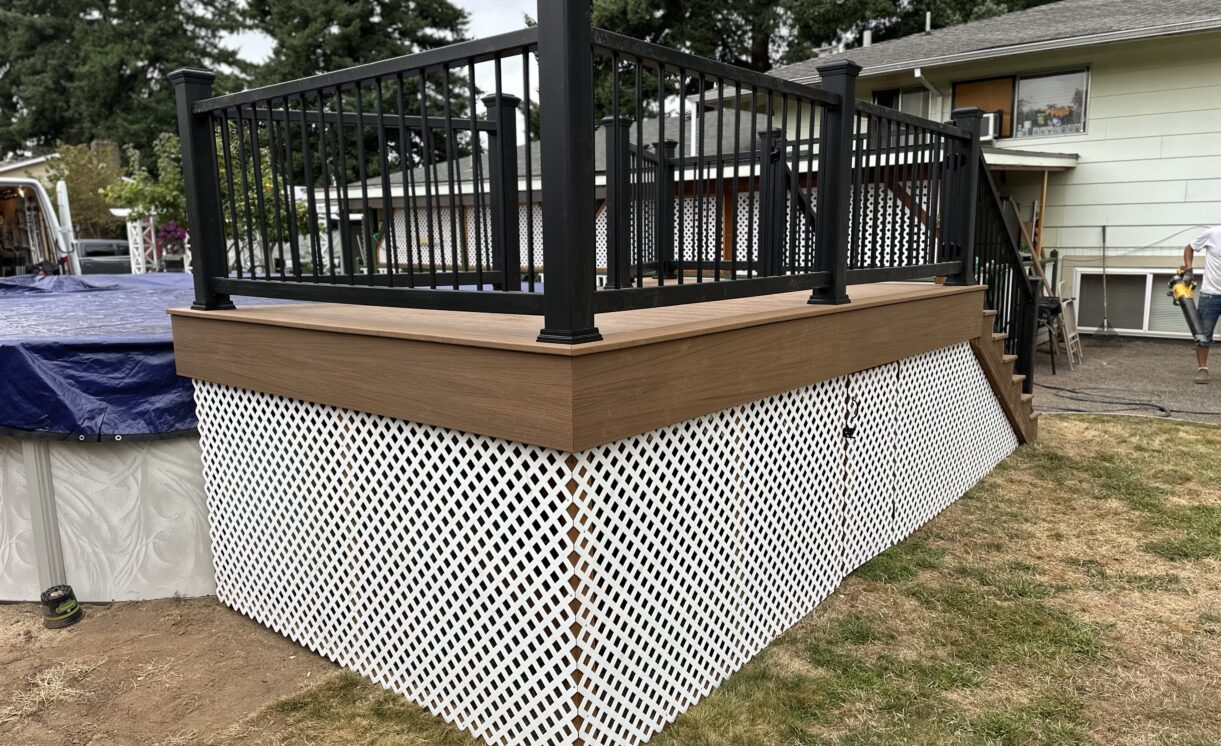
Forest fires are becoming a reality in an increasing number of regions. Therefore, the discussion of decking has long since moved beyond aesthetics. The key lies not only in the decking, but in the foundation itself. It is the framework that determines the fire resistance of the entire structure and influences how it will respond to sparks or heat. Our blog covers a wide range of topics—from materials and engineering to maintenance and planning—and this article provides practical insights without the hype. A steel foundation is a game-changer: it resists fire and maintains its shape where wood fails.

What is a steel deck frame?
It’s a modular system of beams, joists, and posts made of cold-formed steel with a zinc and powder-coated protective coating. The elements have precise geometry, are connected with proprietary brackets and screws, and the finished frame is compatible with any decking—composite, PVC, or wood. This “iron heart” provides a fire-resistant foundation from the start and can support longer spans without losing rigidity.
Furthermore, steel is a non-combustible material, and some framing systems are Class A certified for fire resistance and meet Wildland-Urban Interface (WUI) zone requirements. This means they resist flame spread and comply with increasingly stringent regulations in areas with a higher risk of wildfires.
Key arguments for steel
- Fire resistance and Class A fire resistance in certified systems.
- Stable geometry: does not warp, twist, or warp over time.
- Large spans mean fewer supports, cleaner lines, and greater layout flexibility.
- Compatibility with various decking types and quick installation for crews accustomed to wood.
- WUI compliance, which is important for project approvals and insurance.
Wood vs. Steel: What Happens Under Fire Loads
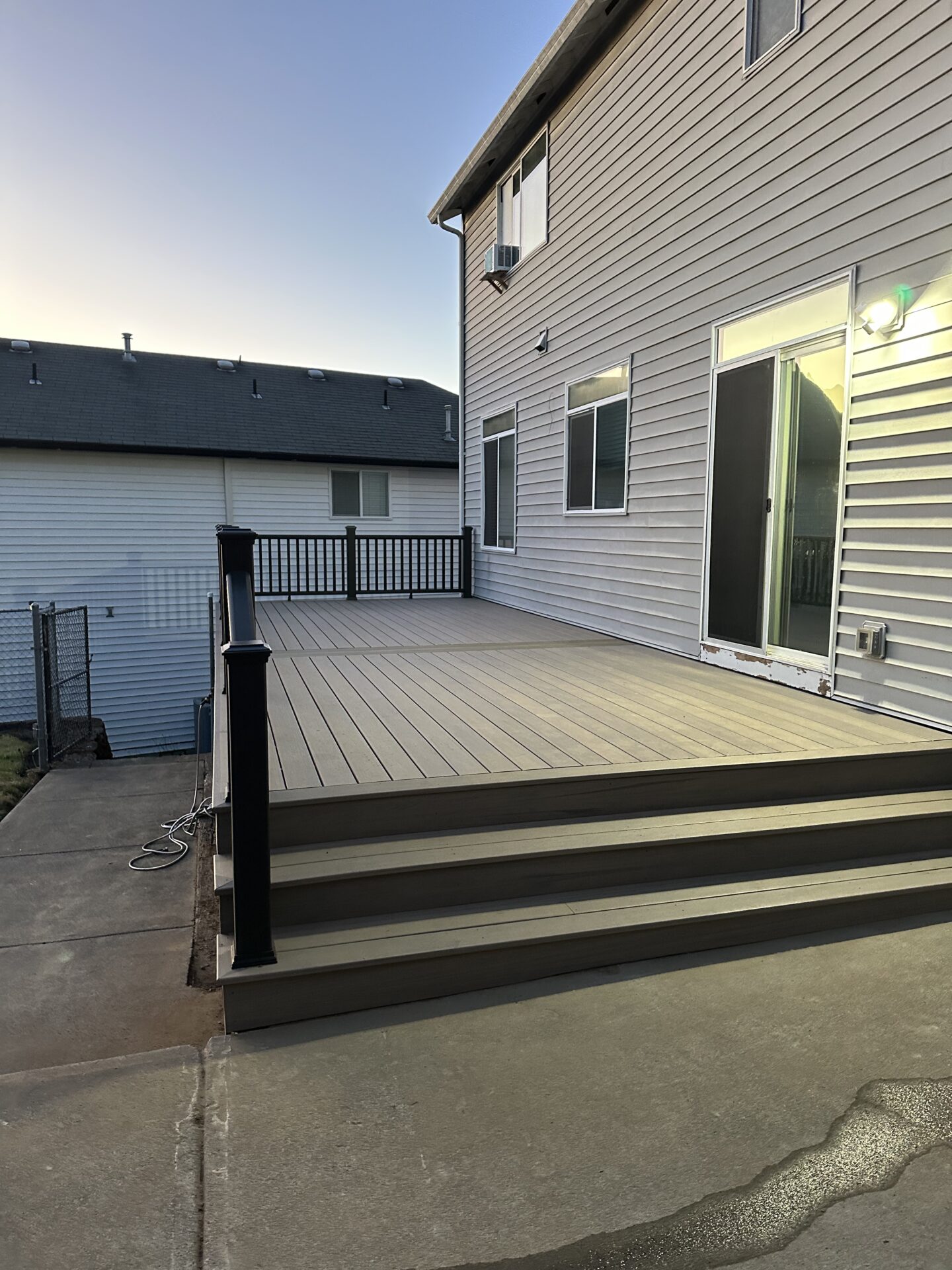
Wood is a warm and familiar material, but it is flammable. Even treatment with fire retardants doesn’t make it fireproof: when heated, it chars, loses its load-bearing capacity, and can support combustion. Steel, on the other hand, doesn’t become a source of flame or add fuel to a fire. With proper design and fastening, it maintains its shape long enough to prevent a fire from receiving additional fuel from beneath the deck.
It’s also important that the modern “top”—the decking—can complement the “bottom.” For example, PVC lines with Class A and Ignition Resistant certification help reduce flashover and fire spread. The resulting system consists of a fireproof base and fire-resistant cladding.
Codes and WUI: What the Rules Require
In a number of jurisdictions that apply the International WUI Code or its local versions, non-combustible materials or “heavy timber” are required for decks and attached structures. This is a clear indication: if a deck is located in a high-hazard zone, metal framing and corresponding decks are not an option, but the standard.
In Oregon, the process of tightening regulations continues: new hazard maps define areas where “fire-hardening” codes and “defensible space” requirements apply. For homeowners bordering natural areas, switching to non-combustible structures is not only a matter of safety but also of compliance with design documentation.
Practical advantages beyond fire resistance
- Durability: resistance to rot, insects, and cracking.
- Smooth surface: steel elements are of uniform geometry and maintain levelness.
- Savings on supports and fasteners due to longer spans.
- Clean aesthetics: fewer posts and braces mean more space in the layout.
- Minimal maintenance compared to timber framing.
Installation and Operation: What to Expect
The step-by-step installation is very similar to a wood plan: posts, beams, joists, blocking, and fasteners. For the foreman, this means a short learning curve and predictable deadlines. Moreover, steel elements are more precise than solid wood, reducing the number of surprises on-site: fewer cuts and adjustments are needed, and the starting rows of decking are more even. The black powder coating visually “hides” in the shadows and requires no finishing.
This base is resistant to moisture under the decking, salt solutions, and wood-boring insects. Heavy rain or sleet do not trigger the chain of damage typical of wood: “waterlogged, warped, fasteners jammed.” This directly impacts the lifespan of the deck and the cost of ownership over a ten-year horizon.
How to Strengthen the System: Decking, Sheathing, and Assemblies
A fire-resistant base truly shines when the decking is selected with fire resistance in mind. For WUI zones, PVC collections with Class A and Ignition Resistant status are appropriate, as are solutions that protect the deck’s underside from sparks: metal panels/soffits and fine galvanized mesh on ventilation openings. These measures reduce the risk of smoldering fires under the decking and are consistent with common fire-hardening practices.
If you choose composites, it’s important to understand their actual flame spread rating: popular lines often have a B rating, which doesn’t always meet the most stringent scenarios. Therefore, be guided by your municipality’s requirements and check the manufacturer’s specifications. The steel frame is the foundation, and the correct decking and assemblies complete the system.
When a steel frame is especially appropriate
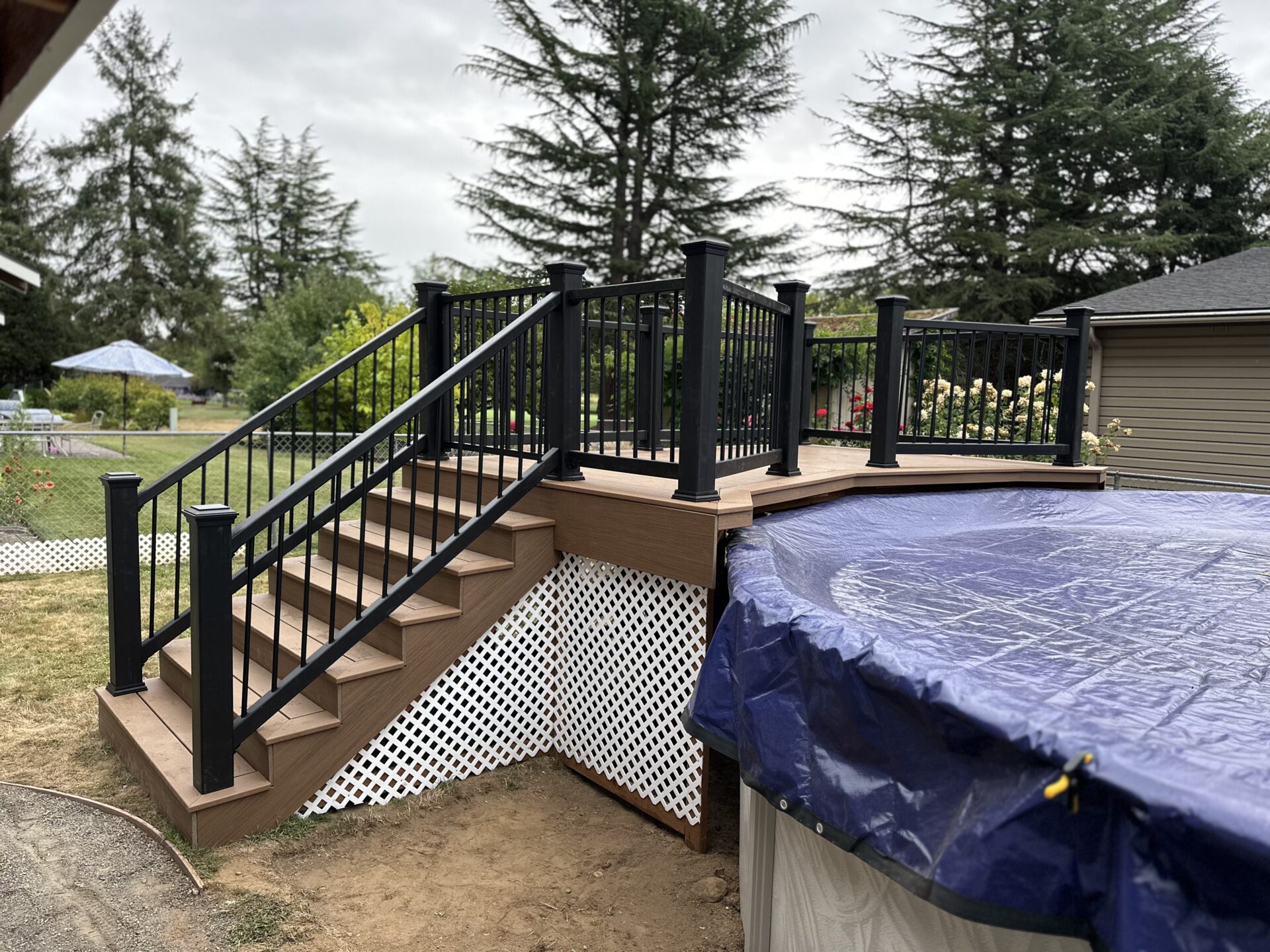
First, if the house is located in a WUI zone or near forests and shrubs. Second, when the design calls for wide spans, floating steps, minimalist lines, and a “thin” visual support. And finally, if low maintenance is important: build once and use for years without fear of the foundation “wearing out.” In these scenarios, steel delivers maximum performance by combining safety, geometry, and durability.
Conclusion
The steel frame is invisible, but it is what makes the deck truly fireproof. A non-combustible base, compatibility with Class A decking, WUI compliance, and stable geometry transform the outdoor area from a “risk zone” into a protected part of the home. Choose a steel frame, add fire-resistant decking, and carefully seal the base—and you’ll have a deck that’s ready for the hot season, not only aesthetically but also technically. If needed, the blog will continue the topic: we’ll discuss the choice of flooring, fire-resistant soffits, and abutment joints—without water, using the language of real projects.
Interested in a structurally superior deck for your home? Our multi-level deck and composite decking projects use premium framing systems. We serve Vancouver WA and Portland OR.


